Crawfish: Is Bigger Better?

Big Crawfish

Dat's a big ol' Mudbug!

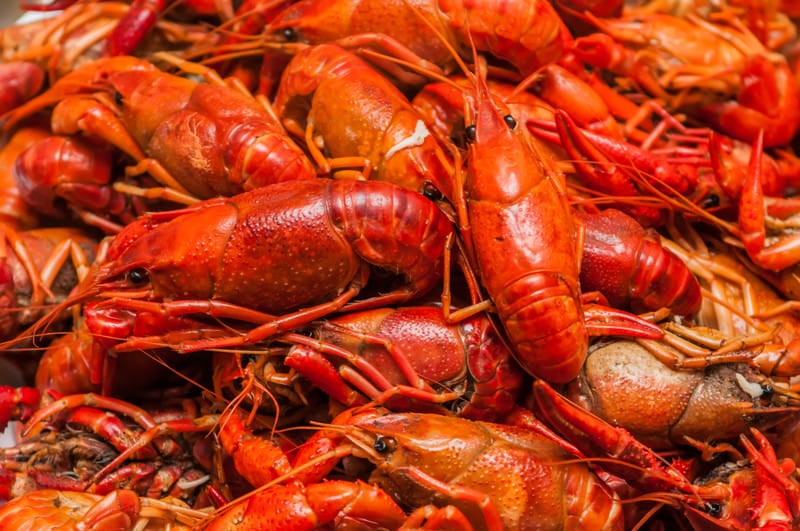
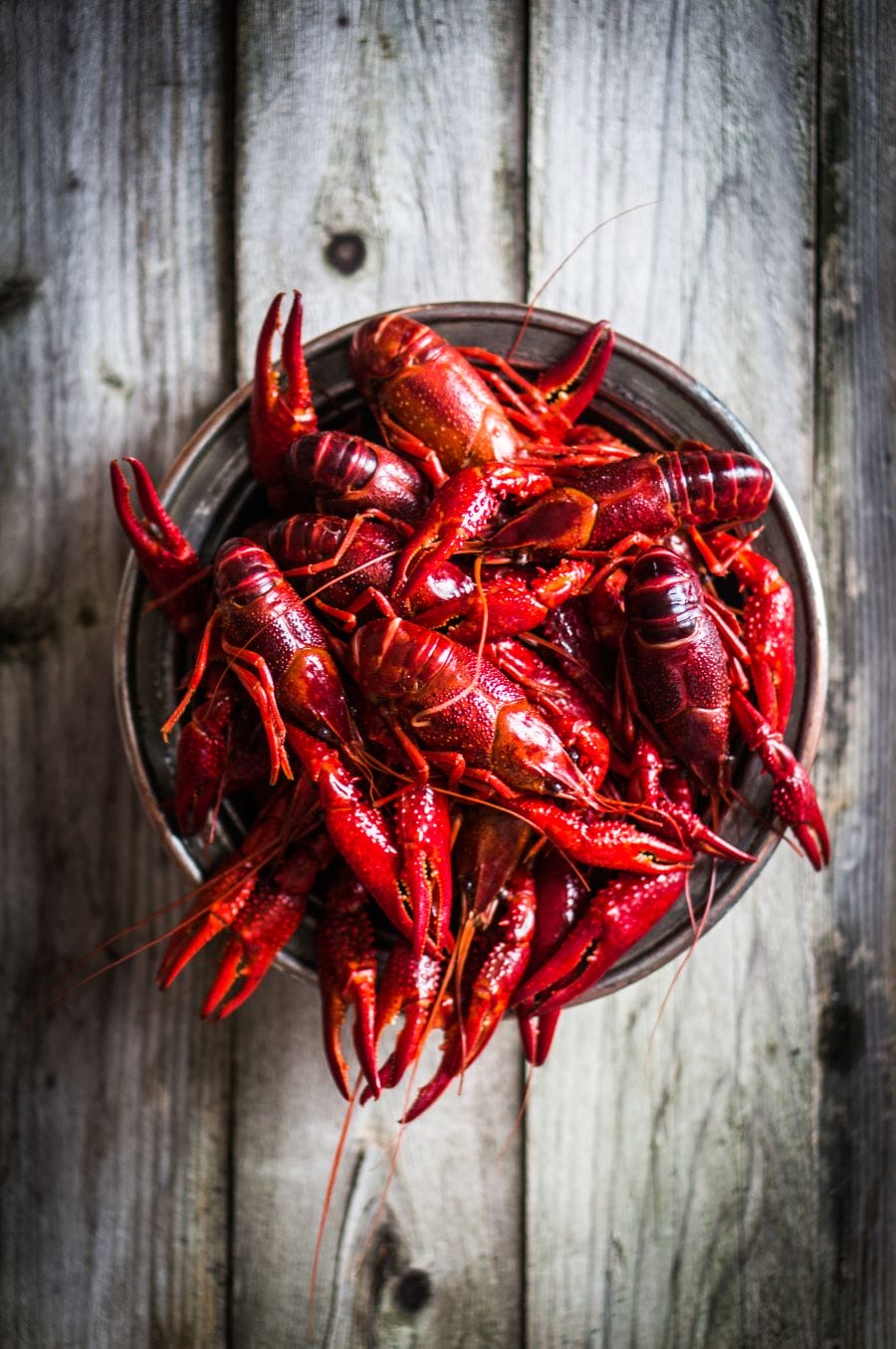
Louisiana crawfish are no strangers to a good party. A crawfish boil is often synonymous with winter/spring fun and sliding into summer. Thus, a boiling pot of potatoes, sausage, onions, corn, various seasonings, and a big batch of crawfish is the center of many a good time. However, the question still remains, what size crawfish are the best? Is bigger really better?

Some may argue that it isn’t the size of the crawfish that matters, but what you do with it. These might say that a skilled master boiler is far more important than crawfish size.

Yet, others will debate that. Some say that a smaller crawfish is just too sweet and delicious to pass up. On the other side of the coin, someone will invariably argue that bigger gives you more bang for your buck, and that nothing beats that big, meaty bite of this mighty crustacean.

Generally speaking, someone who is avidly seeking a particular size may, at times, find out that one or the other is more difficult to come by. Bigger is often graded as “select,” yet these need time to grow, and may not always be readily available. Hence, those for the small bites could argue that these sweet little “mudbugs” are the only way to go, for anyone with a love of crawfish.

‘Field Run” is another grading term that one could find regarding live crawfish. These are not necessarily graded for size. Some will be big, and some will be small. In this case, someone of the “bigger is better” mindset might still be inclined use the smallest ones for bait, much to the chagrin of those of his buddies who love those tender-yet-tiny and bite-sized crawfish.

Other sources will use the more standardized number system. This system throws a third option into the mix, with a medium size. This option offers the big crawfish labeled as grade one, with about 12 to 15 in a pound. Medium sizes are graded as number two, and will have about 16 to 20 in a pound. Small, labeled as number three, is the final grade, with upwards of 21 delicious crawfish in a pound.

In the end, the argument you come up against might still be the same. Although, once you are in this debate, you could ask your opponent if quantity might be as big a factor as anything.

Is bigger really better? Could more be better, too? It’s up to you to decide.

Our Crawfish Make the Grade!

March 28, 2012
By Patrick Bonin

OK, so crawfish aren’t really known for their smarts, but they all “Make the Grade” at Frugé AquaFarms.

Because when we grade crawfish, it’s all about being the biggest in the class… not necessarily the brightest! And only the largest earn the honor of being declared “Select.”

piles of crawfish

“Our select crawfish are 12 – 15 count, meaning it takes just 12 to 15 of them to equal one pound,” explained Mark Frugé, co-owner of Frugé Aquafarms. “These represent the largest crawfish we produce. They’re at the head of the class.”

But we know not all customers enjoy really large crawfish, so they might select a different mix: the “Washed and Graded” category.

“Washed and graded run 16-20 count, so it takes 16 to 20 of them to make a pound,” Mark said. “Washed and graded provides a good mix of medium and large crawfish. Many of our customers really like this size for crawfish boils.”

Whichever size you prefer, our grading machine enables us to provide our customers with a consistent, reliable product.

“Many of our restaurants prefer purchasing graded crawfish because it provides them with a uniform product to serve their customers,” said Richard Hotard, sales manager for Frugé AquaFarms. “They know that every order they serve will be consistent, which makes for happy customers.”

So how are crawfish actually graded?

The whole process takes place at our dock on the crawfish farm, where our grading machine is located. (Believe it or not, our grader was originally designed to sort potatoes, but it does a fantastic job with mudbugs, too!)

The crawfish arrive at the grader straight from the ponds where they were caught earlier that day: big ones, little ones and everything in between. (By the way, we call that the “straight run” and you can request that mix, too: it’s how we get ‘em “straight from the boat.”)

They’re then placed onto a conveyor belt, which transports them up to the actual grading area. Along the way, and throughout the entire process, the crawfish are constantly sprayed with water to clean them up and keep them wet and cool.

The grading occurs as the crawfish move across a series of spinning plastic rollers, which are spaced so that larger crawfish are continually transported across the grader. Smaller crawfish can “slip through the cracks” and are removed from the mix early in the process – they are usually sold to peeling houses for their tasty meat.

The space between the rollers gradually expands, allowing medium-sized crawfish also to eventually pass through and slide down to the sorting table. The last ones to “fit through the cracks” are the big ones, and they arrive together at the end of the grading process to be re-sacked with the coveted “select” label.

The grader can process up to 3,500 pounds of crawfish per hour, which is great when a typical day’s catch ranges anywhere from 15,000 to 18,000 pounds!

The graded crawfish are then sacked and packed: all cleaned up and ready to appear at a crawfish boil near you!

So if you enjoy boiling medium-sized crawfish, or want to impress the folks with “only the big ones,” don’t forget to “Go for the Grade!”

You’ll definitely get an “A for Effort” at your next boil!

Tools of the Trade

Dumping crawfish from trap to the boatBy Patrick Bonin
March 20, 2012

When you’re out with friends enjoying some amazing Louisiana crawfish, have you ever wondered how all those mudbugs are actually harvested? Or how we keep ‘em “alive and kicking” all the way to splashdown in your pot? Did you ever think about how they’re graded by size, so you can buy a sack of “monsters” if that’s what you like?

In this blog, we’ll give you “behind the scenes” access as we harvest and sort more than 1,000,000 pounds of crawfish here at Frugé Aquafarms (cajuncrawfish.com), and introduce you to some of the specialized equipment that makes it all happen!

Crawfish Boats

Boat out of water

Ever see an aluminum boat outfitted with four 13-inch tires and one big ol’ paddlewheel?

Well, that’s how we roll (and float!) here at Frugé AquaFarms.

These custom-built, hydraulic-powered paddlewheels are the workhorses of harvesting season out on the crawfish farm. But the paddlewheel in the back doesn’t float and churn through the water: it actually runs in the mud on the pond bottom to propel the 14-foot boat forward.

And foot pedals, not a steering wheel, allow our fishermen to navigate hands-free, so they’re able to easily empty the traps full of crawfish into a sorting tray and keep the process moving. And speaking of moving: the boat rarely stops during the harvesting process within a pond! Traps are spaced so the fisherman has time to grab it, empty it and re-bait it just in time to place it down and pick up the next trap.

So why the wheels on each side of the boat? To make traveling from pond to pond easier!

“The four wheels allow the boats to be amphibious,” said Mark Frugé, co-owner of Frugé AquaFarms. “We’re able to drive on land for short distances, cross farm roads and get into and out of the ponds pretty easily.”

Mark explained that when harvesting for the day is complete in a pond, the fisherman can simply drive out and head for the next pond, so the whole harvesting process can begin again. The paddlewheel provides the power, and the tires provide clearance for the boat to ease over the land.

This way, fishermen don’t have to waste time getting their gear and bait into and out of several boats throughout the day: it streamlines the process and makes the tough task of harvesting all those mudbugs a bit more efficient.

While the fisherman is traveling from trap to trap inside a pond, in addition to placing fresh bait in the outgoing trap, he quickly throws out any sticks, grass or rice stubble and pushes the catch into any of four sacks hanging from the sorting tray.

From the boats, the sacked crawfish are brought to our dock, where they’re rinsed, cleaned, sorted and chilled to about 40 degrees in huge walk-in freezers. Next stop: a crawfish pot near you!

Sorting crawfish on a boat


Coming Up: Get the scoop on our custom-made crawfish sorter! It can “separate the men from the boys,” and it gives our customers who purchase different grades of crawfish reliable, consistent sizing. We’ll show you how it works next time in “Tools of the Trade.”

Why I Love Crawfish

Crawfish dumping out at a crawfish boil

Crawfish, Crawdads, Mud Bugs. What is it about these beady-eyed Cajun crustaceans that warm our hearts and salivate our mouths come March each year?

Of course, they’re a delicious meat in and of themselves, as well as the perfect complement to an ice cold beer, but even more than being a favorite food, crawfish represent a beloved experience often lost by many in the rush of our modern world. Crawfish bring people together, in a spirit of “come one, come all,” to slow down, eat, and laugh.

The anticipation of that first crawfish boil of the season can be felt in the southern air as spring arrives, signifying warmer weather and good times ahead. All year, we’ve waited expectantly for crawfish season to arrive. Gathering together again around newspaper-covered picnic tables, we celebrate a blend of outdoors, camaraderie, Jimmy Buffett music, and gluttonous feasting. Pounds of salt, spices, and all the lagniappe boil away, while barefooted kids chase each other with bugs in hand. Both young and old gather, friends shoot the breeze over Abita Amber, and the excitement grows as the crawfish marinate. The first batch hits the tables, relinquished to the hungry guests, and it’s finally time to get our hands dirty.

Boiling crawfish

We’re messy, our lips are burning, and yet, we continue on in our rummage through the steamy batches of seafood. With primal sophistication, we devour our sweet Louisiana lobster one by one, sucking the heads and ripping the spicy meat from the tail. Under shade trees, in parks and backyards throughout the South, we celebrate life together over those crustacean-laden tables. Our whole day is dedicated to the important things of life.

Why do us Cajuns love our crawfish? Words can’t adequately explain our passion, as it’s something that must be experienced for oneself. We welcome neighbors and newcomers alike to our festivals and backyards, as long as you eat the critters properly and heed our friendly warning to resist rubbing your eyes. If it were up to us, the whole world would experience a little more crawfish in their lives, and with it, some much needed kindness and cheer.

Crawfish Gone Green

St. Patrick's Day crawfish

St. Patrick’s Day is celebrated on March 17, the saint’s religious feast day and the anniversary of his death in the fifth century. The Irish have observed this day as a religious holiday for over 1,000 years. On St. Patrick’s Day, which falls during the Christian season of Lent, Irish families would traditionally attend church in the morning and celebrate in the afternoon. Lenten prohibitions against the consumption of meat were waived and people would dance, drink, and feast–on the traditional meal of Irish bacon and cabbage. But what about the crawfish? St. Patrick’s Day is the Irish version of Mardi Gras, and who can have a real party without crawfish?

Order now, so you won’t have to even think about celebrating it without.

www.cajuncrawfish.com

How to Boil Crawfish

To receive a big box of live wiggling, jiggling, snaping, crawfish on your doorstep is super exciting, but to some it can also be a little intimidating. Many folks wonder; what do I do with them now?  Over the years many people have asked us how to boil live crawfish.  We shot this video to show you just how easy it can be!

The follwing video takes place in real time, and features our own Ed Guidry showing you exactly how to boil a big sack of crawfish. All you need is a pot that’s big enough* (with a lid), and the means to bring that pot to a boil. We’ll send you the crawfish, the seasoning and instructions on what to do.
The only other thing you may need is two bags of ice. The ice is put on the freshly cooked crawfish to add extra flavor to the crawfish, making them spicier.  This last part is totally optional.

**A 60 quart pot is the perfect size to cook a sack (30 lbs) of crawfish. If you use a 24 quart, then only put 10 – 15 lbs in at a time.

Abundant, Affordable Crawfish Crop Predicted for 2012

CRAWFISH pouring out of a sack
By Patrick D. Bonin BRANCH, LA.
Ideal growing conditions and a mild, wet winter thus far have set the stage for what is shaping up to be a bumper crawfish crop in south Louisiana.

“For 2012, everything I’m seeing right now indicates we’re lined up for a high production year,” said Mark Fruge’, co-owner of Fruge’ AquaFarms in Branch, located about 15 miles from Lafayette.“With these mild temperatures, the crawfish are ahead of schedule on their rate of growth and production levels because they’ve been so active. The industry as a whole is probably producing double where we’d normally be right now.” Above-average temperatures and plentiful rainfall have the tasty crustaceans believing that spring has already sprung, and crawfish traps throughout Cajun Country are bursting with the hungry mudbugs.

“The temperatures that we’ve been experiencing are like March temperatures, so the crawfish in the field are reacting as though it’s March,” Fruge’ said. “Industry-wide, the people I’ve spoken with are all having similar outcomes. Everyone is doing well production-wise, and we should see strong poundage-per-acre production numbers.”

That means good news for consumers, who could see reduced prices compared to recent years when below-average rainfall negatively affected production.

“It should be a great year with abundant and affordable crawfish,” said Mike Fruge’, Mark’s older brother and fellow co-owner of Fruge AquaFarms. “I’m predicting a very high volume season. The quality right now couldn’t be better, and it’s only going to improve as we head into the spring.”

Volume is so strong right now Mike said the farm actually stopped harvesting for one day last week. “That’s the first time in about five years we’ve had to stop production to let the market catch up,” he said. “At this time of the year, I don’t think that’s ever happened before.”

Typically, depending upon weather, the harvest will continue through late June or the first week of July. As the season progresses, Mike predicts crawfish will be more affordable than in recent years.

“Right now, the price at the wholesale level is about 30% less than it was at this time last year,” he said. “That transfers all the way down the line, so consumers should see lower prices as well.”

Over the past 29 years, the Fruge’ brothers have seen their original 20-acre crawfish pond expand into a working 2,400-acre farm which supplies a full-service seafood company covering major markets in Texas, Oklahoma and Louisiana.

For more information on Fruge’ AquaFarms or the 2012 Louisiana crawfish season, contact Courtney Fruge’ 337.334.9620

What if We Had Crawfish This Size?

Giant Lobster women- giant crawfish?

Some of you may have seen the news last week; The largest lobster ever caught in Maine was caught off of the coast of Maine, and man what that one whopper of a crustacean! In one picture on the Reuters News website had a woman holding it like it was the family dog. In another photo it was as big as a little boy that looked like he was going to ride it!

The Lobster, nicknamed “Rocky” was 40 inches long and weighed in at 27 lbs. Rocky was big, but according to the Guinness Book of World Records, the world’s largest lobster was a beast of a 44-pounder caught off Nova Scotia back in 1977.

What, No Party?

So what did these fisherman do with Rocky? Did they buy a bigger pot, some beer and invite all of the neighbors over for a party?No, they didn’t, they let old Rocky go… Many of you know what they did wrong, they named him! Folks who grow up around farms and ranches know that you don’t name your food!

Now I could be wrong, but I bet that if someone was to pull a giant prehistoric 27 lb. crawfish out of a pond down here in Cajun country there would be one heck of a big party. The neighbors wouldn’t be going to bed hungry that night!
That’s one thing we love about crawfish, folks ain’t afraid to share em!

Photo credit: x-ray delta one

Production is Boiling! Bumper Crawfish Crop Predicted for 2012

BRANCH, LA.
By Patrick D. Bonin

crawfish boilThe groundhog may have seen his shadow and predicted six extra weeks of winter, but don’t tell that to south Louisiana’s crawfish population.

Mild temperatures, timely rains and ideal water conditions have resulted in a perfect storm of plentiful crawfish that even Punxsutawney Phil couldn’t have predicted.

“For 2012, everything I’m seeing right now indicates we’re lined up for a high production year,” said Mark Fruge’, co-owner of Fruge’ AquaFarms in Branch, located about 15 miles from Lafayette. “With these mild temperatures, the crawfish are ahead of schedule on their rate of growth and production levels because they’ve been so active. The industry as a whole is probably producing double where we’d normally be right now.”

And while the calendar says the first day of spring is still almost six weeks away, the tasty crustaceans raised in rice fields and ponds throughout Cajun Country are making the most of the mild, wet conditions.

“The temperatures that we’ve been experiencing are like March temperatures, so the crawfish in the field are reacting as though it’s March,” Fruge’ said. “Industry-wide, the people I’ve spoken with are all having similar outcomes. Everyone is doing well production-wise, and we should see strong poundage-per-acre production numbers.”

That means good news for consumers, who could see reduced prices compared to recent years when below-average rainfall negatively affected production.

“It should be a great year with abundant and affordable crawfish,” said Mike Fruge, Mark’s older brother and fellow co-owner of Fruge AquaFarms. “I’m predicting a very high volume season. The quality right now couldn’t be better, and it’s only going to improve as we head into the spring.”

The Fruge’ Difference

Over the past 26 years, the Fruge’ brothers have seen their small 20-acre crawfish farm expand into a major full-service seafood company covering major markets in Texas, Oklahoma and Louisiana. Three times each week during crawfish season, their trucks make the 400-mile trip to the company’s Grand Prairie, Texas Distribution Center in the Dallas Metroplex with up to 10 tons of crawfish onboard.

“Even though they’re metropolitan cities located hundred of miles from south Louisiana, the markets are crawfish savvy. The restaurants we service expect large, fresh, high-quality crawfish, and that’s exactly what we provide,” said Richard Hotard, Fruge’s Sales Manager.

“We were fishermen before we were distributors, so we know this business like very few others. And we understand how vitally important every order is for our customers. So we grow ‘em, we catch ‘em, and we deliver ‘em. And we’ve done it successfully for more than 20 years.”

Those three factors highlight the Fruge’s model for success, and set them apart from other distributors, wholesalers and crawfish farmers.

“We’re different and better because we control all three key phases of getting the crawfish to market,” Mike explained. “We grow them ourselves, we operate a wholesale dock and we distribute them. We control the entire process, which is crucial with a highly perishable crop like crawfish that is subject to supply issues. We simply have a lot more flexibility to meet our customers’ needs than someone who only controls one phase.”

Crawfish Over a Bed of Rice

Fruge rice binThe groundwork for this year’s bumper crawfish crop was actually laid last March, when Mark and his crew planted rice on about half of the farm’s 2,400 acres. (In addition to the crawfish crop, the farm produces 8,000,000 pounds of rice annually.)

When the rice crop grows tall enough to provide shade to cool the water, typically in May, the fields are flooded and mature crawfish are seeded into the ponds.

“After the seeding is complete, we simply manage the fields for rice production and we usually release the water in late June or early July,” said Mark, who readily admits to enjoying life in the fields much more than sitting behind a desk. “Rice is harvested in August. By that time, the crawfish have burrowed deep into the ground and go into hibernation during the heat of summer.”

After the rice harvest, maintenance work is performed in the fields to repair any levees damaged either by wildlife or equipment. The ponds are flooded again in late September or early October to create prime crawfish habitat.

“When we flood, the stubble is regenerating and growing, so the female crawfish come out with the hatchlings on their tail and begin feeding on the rice,” Mark said. “At that point, the young crawfish are about the size of ants. It typically takes about three months for the crawfish to grow to marketable size.”

Crawfish harvesting begins around the first of the year and normally goes through the 4th of July. At that point, the rice harvest is right around the corner, and the process starts all over.

“In late May, the crawfish harvest usually starts to decline. At that point the fields are getting barren because the crawfish have consumed almost all of the available food source,” he said. “When the water temperature gets too high, it becomes lethal to the crawfish and they can actually start dying in the fields. So when we start getting 90 degree days, the harvest typically begins to go down.”

And although the winter has been unusually mild so far, Mark knows that could change – quickly.

“You just never know what Mother Nature has in store,” he said. “If we get a cold snap, even though the crawfish have grown and are much more advanced right now, they’ll still shut down and go dormant if the water temperature drops below 50 degrees. They don’t burrow again, but they go to the bottom of the field and get under the stubble and kind of just sit in the mud. It just stops their activity so they quit feeding. At that point, production becomes much more of a challenge.”

A Day on the Farm

At the height of harvest season every spring, Fruge Aquafarms employs eight to ten fishermen who harvest crawfish every morning. With about ten traps per acre and each fisherman responsible for harvesting 100-150 acres, they each empty, re-bait and reset about 1,000 traps every day.

“At the peak of the season, you try to average about one pound per trap per day,” Mark said. “ Under our model, our ‘Holy Grail’ if you will, is to produce 1,000 pounds per acre throughout the course of the season.”

Fisherman set out every morning about 7 a.m. with enough bait and gasoline to finish their run of traps. Each man uses a 14-foot aluminum boat outfitted with a large paddlewheel in the back that actually rolls over the pond bottom and propels the boat forward. A trap is picked up and emptied onto a sorting table, then re-baited and set down when the boat arrives at the next trap.

In a process where the boat never stops moving, the fishermen steer the boat with foot pedals for hands-free operation, and the crawfish go from a sorting tray to a sack before making their way to the farm’s dock in the early afternoon. They’re weighed in, and each man’s production is entered into the catch register so every field’s production can be monitored.

“We use a pyramid-style trap with three funnels about four inches from the bottom,” Mark said. “The crawfish enter to eat the bait fish. It’s made of mesh, so the smaller ones will eat and pass through the wire. The ones that are marketable size stay in the trap because of the diameter of the wire.”

crawfish graderAfter the crew eats lunch, the crawfish are washed and graded into three sizes. That’s where coordination between sales and production is crucial: it’s vital to have enough crawfish on-hand to fill customers’ orders, but it’s also critical not too have harvested too many. With the crustaceans’ relatively short shelf life, mistakes can be costly.

“Harvest-wise, we try to plan two to three days in to the future. So we speculate on what we can produce and what our customers will need,” Mark said. “We try to make the dock process flow because if you’re not planning out, you can get nailed by having too much or not enough… And either one of those scenarios can cost you quite a bit of money.”

What’s Up, Dock?

crawfish dockThe man in charge of managing the dock is Operations Manager Ed Guidry, who literally grew up on the farm and has been there his whole life. His mom still lives in the house he was raised in, adjacent to one of the rice fields visible from the farm’s main warehouse. His mother actually helped to raise both Mike and Mark, and the three were childhood friends.

“I’ve done just about every job there is to do out here,” he said with a chuckle.

Taco, his bulldog/Catahoula hound mix, never seems to stray too far from his side as he constantly works the dock and instructs the workers on grading, packing, weighing and loading the day’s catch.

“The main thing is water: keeping the crawfish wet and keeping them cool,” Guidry said. “If you can keep them wet, you keep them healthy and provide your customers with the freshest product possible.”

To that end, the crawfish are kept cool and moist from the time they arrive back at the dock until they are placed onto a truck bound for the Grand Prairie Distribution Center. In the large walk-in coolers, where the crawfish are kept at a chilly 40 degrees, steady mists of water shower down on the sacks to clean up the catch and keep them wet. The grading machine also gives them another bath as they are grouped and sacked according to size.

The season rolls on, and the daily routine of fishing, weighing, grading and shipping plays itself out each and every day on the Fruge’ dock. Mark and Ed work together to keep their fingers on the pulse of the business, always making sure enough crawfish are available to ship to anxiously waiting customers. All while trying to prevent having too many crawfish on hand, which might have to be sold to a peeling house at a loss.

“The market changes almost daily,” Mark explained. “It’s all based on a perishable product with a limited shelf life. Because of that it can be volatile, with pretty good swings. Mother Nature could go from cold to hot and all of a sudden your production level can literally double early in the season and you flood the market. Or she might put you in the deep freeze, and you’re looking at a cold weather shut down.”

So despite the incredible amount of work and preparation that goes into creating and harvesting a successful crawfish crop, both brothers know they’re at the mercy of something they ultimately have no control over.

“It’s definitely more an art than a science, and the weather drives it,” Mike said. “I think it’s a matter of getting the right timely rain at the exact time the crawfish need it, which allows them to survive in their burrows over the summer. We could do everything exactly according to plan, but if we don’t get the right weather, it just won’t work”

It’s a delicate balancing act every day between production crew and sales team, along with one big unknown factor that always has to be accounted for: Mother Nature.

“Well, I have enough for today,” Guidry proclaimed with a smile one day in early February as he monitored the day’s production against the number of pounds that had to be on the truck bound for Texas in a couple of hours. “But every day changes and it’s something different. We’ll come back and do it all again tomorrow.”

Fruge boys at Fruge Aquafarms

Who Doesn’t Like Cake?

With Mardi Gras quickly approaching, don’t miss out on one of the best parts of the season… it’s King Cake time!! This delicious woven bread with its delectable spices, fillings and frosting is a staple in Cajun culture. The best part is there’s a flavor for everyone… cream cheese, Bavarian cream, caramel, chocolate, German chocolate, lemon, raspberry, and strawberry!

Whether you’re bringing it home to enjoy with your family and friends or bringing it to work to start up a new tradition, it’s a great way to celebrate Mardi Gras and our Cajun traditions! Just make sure everyone knows the rule… Who every gets the baby, has to bring the next king cake!